

Río Secreto: The Guide to Playa del Carmen's Underground Cave River
Río Secreto is not a cenote you snorkel across, it's a guided cave swim through underground passages near Playa del Carmen, in near total darkness lit only by headlamps. Here's what an actual visit looks like, and why the reserve enforces some of the strictest conservation rules on the coast.
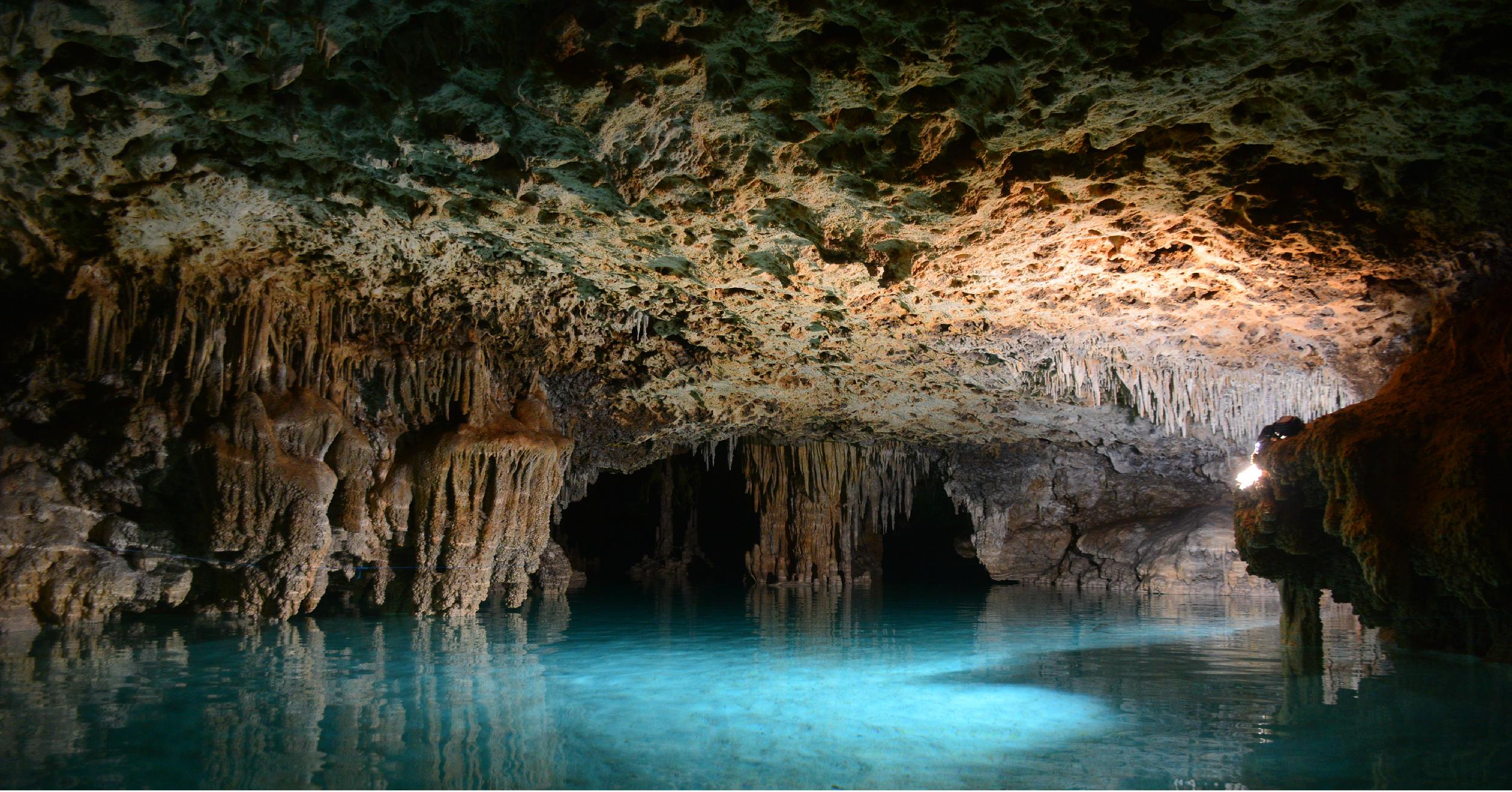
Most travelers who search for Río Secreto expect another cenote, a blue window cut into the jungle floor where you snorkel among sunlight and tree roots. What they find instead is something closer to spelunking than swimming: a system of flooded limestone caves south of Playa del Carmen where the only light comes from a headlamp strapped to your own helmet, and the water you wade and float through has been carving its way through rock since long before anyone in the region kept written history.
Río Secreto is not a snorkel stop you add to a beach day. It is a guided, multi hour expedition through underground passages, wetsuit zipped up, helmet on, moving between chest deep pools and chambers where stalactites hang low enough to graze your headlamp beam. Comparing it to Chiik's own general guide to the region's cenotes is almost unfair to both: cenotes are the open sky version of this landscape, Río Secreto is what happens when that same water never found a way out.
The cave itself is barely two decades old as a place anyone could visit. It was discovered in 2004 south of Playa del Carmen when a local farmer chased an iguana into a hole in the ground and found himself standing at the mouth of an underground river; the site would not open to the public until April 2008, after roughly a year of careful exploration and mapping. Even now, the reserve routes visitors through only about ten percent of the 38 kilometers of passages that have been surveyed, and it caps how many people can enter on a given day. That restraint, more than any single formation inside, is the real subject of this guide.
What Río Secreto actually is, and why it isn't the cenote you're picturing
Most of what the Riviera Maya calls a cenote is a sinkhole: the roof of an underground cave collapsed at some point in the last several thousand years, opening a pool to daylight, tree roots, and the snorkelers who now float across it. Chiik's own cenotes guide covers a dozen of those, from wide open blue pools to cavern ceilings with a single skylight. Río Secreto works differently. Its roof, for the most part, never fell in. What visitors enter is a closed limestone cave that still has water moving through it the way it has for roughly two million years, and the only reason anyone can see it at all is the headlamp built into the helmet the tour provides.
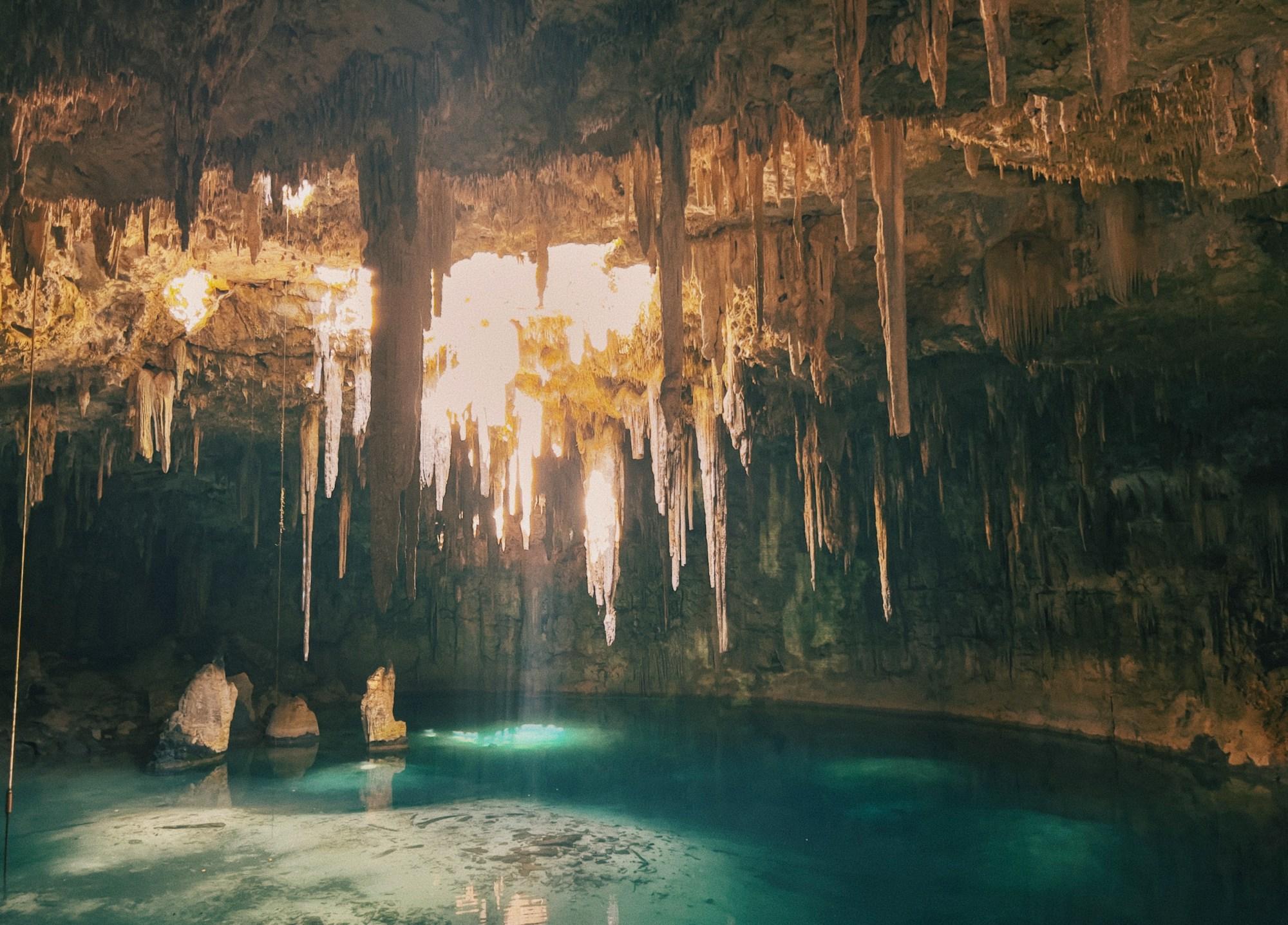
Once inside, you alternate between walking through knee or waist deep water and floating through stretches where your feet cannot touch the bottom, a life vest keeping you upright while a guide sets the pace ahead. Sections of ceiling drop low enough that you tilt your head to pass beneath stalactites, some barely thicker than a pencil, others fused all the way down to the stalagmite rising to meet them, forming solid columns called stalagnates. Scattered through the chambers are formations that look almost wrong for a cave: pisolites, small round mineral pearls that formed by rolling in shallow pools the way a snowball grows, and helictites, thin mineral spurs that twist sideways and even upward in apparent defiance of gravity, still not fully explained by cave scientists.
None of it happened quickly. The limestone bedrock beneath this stretch of the Yucatán Peninsula has been dissolving and redepositing into these formations for something like two and a half million years, and Río Secreto's passages sit around 25 meters below the surface at their deepest points. Stalactites in tropical cave systems like this one are commonly cited as growing on the order of one centimeter per century, a figure guides repeat inside the cave partly because it recalibrates how a visitor looks at everything around them; a formation the length of your forearm did not grow during anyone's lifetime, or their grandparents' lifetimes, or several generations before that.
That timescale is also the simplest explanation for why the reserve treats the cave the way it does, which the conservation section below gets into. But even without that argument, the caves are simply a different kind of experience from a cenote day: less about floating in sunlit turquoise water and more about moving through total darkness with nothing but a beam of light and a guide who has walked this exact passage hundreds of times.
From a farmer chasing an iguana to a nature reserve: the short history of Río Secreto
Río Secreto's discovery reads more like an accident than an expedition. In 2004, a farmer working land south of Playa del Carmen chased an iguana into a hole in the ground and found himself looking at the entrance to a flooded cave system nobody outside the immediate area knew existed. It took roughly a year of formal exploration and mapping, carried out between December 2006 and September 2007, before the operators who would go on to run the reserve understood enough of the system to consider opening any part of it to visitors. Río Secreto welcomed its first paying guests in April 2008, and to date the mapped system runs to about 38 kilometers of passages, of which the guided tourist routes cover only around ten percent.
The cave's human history goes back far earlier than 2004, though. Archaeologists working inside Río Secreto have recovered ceremonial altars, cave paintings, and ceramic vessels dated to the postclassic Maya period, evidence that sections of the system were used for ritual purposes long before any tour group carried a headlamp through them. That context tends to reframe the visit for a lot of people: this is not an attraction built for tourism from scratch, it is a space that already meant something to the people who lived on this land, rediscovered by accident centuries later.
The cave also has residents who never left. Bats roost in the drier chambers, and the water itself holds blind Mexican tetras that evolved without functioning eyes in total darkness, along with catfish, tarantulas, and amblypygi, a spider relative with long whip like front legs and no venom, more startling to look at than actually dangerous. Guides point these out as the group moves through, less as a wildlife checklist and more as a reminder that the cave was never actually empty, even in the centuries when no human walked through it.
What a visit actually looks like, from arrival to the walk back into daylight
A Río Secreto visit runs about five hours from arrival to the buffet lunch at the end, though only around two of those hours are actually spent moving through the cave itself. The rest goes to logistics that matter more than they sound: changing into a wetsuit, being fitted with a helmet, headlamp, water shoes, and a life vest, and a safety briefing where the guide checks who in the group can swim and who would rather stick close and use one of the walking sticks available for extra balance on the uneven, sometimes slippery passages.
Before anyone touches the water, there is a rinse off shower, and it is not optional. Sunscreen, insect repellent, makeup, and lotion all carry chemicals that the cave's closed water system cannot process the way an ocean or an open cenote can dilute them, so a quick shower strips all of that off before the group ever steps toward the cave mouth. Jewelry, watches, and even bandages come off too, anything that could work loose in the water or introduce something the ecosystem has never had to deal with.
Groups stay small, generally somewhere between ten and twelve people, and different groups get routed through different sections of the open ten percent of the system so that no single passage takes the full weight of every visitor booked that day. Inside, a certified guide leads the way with the only substantial light source in the group, stopping at the more distinctive formations in each chamber to explain what it is, roughly how old it might be, and why touching it, even lightly, is the one thing not allowed at any point on the route. Cameras and personal photography equipment generally stay behind too, though some operators sell a professional in cave photo package separately for anyone who wants images without carrying their own gear through the dark.
The route itself alternates between wading through water shallow enough to walk and floating through stretches too deep to stand in, the wetsuit keeping the cool, constant temperature of the underground water from ever becoming uncomfortable. By the time the group climbs back out into daylight, most people describe a strange kind of disorientation, not from the dark itself but from how ordinary the sunlight and the heat of the Riviera Maya feel again after two hours somewhere that light barely reaches. A buffet lunch closes out the experience, giving everyone a chance to dry off, compare notes on the formations they liked most, and settle back into the world above ground before the ride back to Playa del Carmen.
The conservation angle: why a private reserve says no to sunscreen and yes to a shower
Everything that feels restrictive about a Río Secreto visit, the mandatory shower, the banned sunscreen, the ban on touching formations that took a thousand lifetimes to grow, comes from the same place: this cave sits inside the same aquifer system that supplies fresh water to much of the Yucatán Peninsula, including many of the cenotes covered in Chiik's general cenotes guide. Whatever gets rinsed off a visitor's skin in this water does not stay contained to Río Secreto. It moves through the same porous limestone that connects cave systems, cenotes, and eventually the coastline itself.
The reserve funds its conservation work, and a broader environmental education program for local communities, through Centinelas del Agua, the nonprofit foundation tied to Río Secreto's operations. In practice that means the roughly ten percent of the system open to tourism effectively subsidizes protection of the other ninety percent that no visitor ever enters, along with water quality monitoring and outreach work that has little to do with tourism at all. It is one of the more concrete examples on this coast of a for profit tour funding conservation that would otherwise have no obvious source of money, since flooded cave systems with no direct commercial use rarely attract public funding on their own.
The visitor caps and small group sizes work the same logic from a different angle. Every additional body in the water raises the chemical load the ecosystem has to absorb and increases the physical risk to formations that cannot regrow within a human lifetime if they are chipped or touched. Capping daily visitors and routing separate groups through separate sections spreads that impact thin enough that the cave can, in theory, absorb it indefinitely rather than degrading a little more with every tour that passes through.
None of this is presented to guests as a lecture. Guides mention it in passing, usually while explaining why a particular stalactite has a faint discoloration where an early visitor once touched it, decades before the current rules existed. It tends to land harder than a formal conservation briefing would, because it makes the abstract math of two million years of formation against thirty seconds of contact impossible to ignore once you have seen the mark it leaves.
Who this tour is not a good fit for
Río Secreto is built to be accessible to people who cannot swim, which surprises a lot of visitors expecting an activity this immersive to require real swimming ability. It does not. The deeper stretches use a mandatory life vest and a guide who sets a pace slow enough that floating, not swimming, is all that is required, and walking sticks are available for anyone who wants extra stability on the wet limestone underfoot.
That accessibility has real limits, though. The minimum age is four for the standard route, rising to seven for versions of the tour that add a snorkeling segment, and pregnant visitors are not permitted to enter at any stage of pregnancy, given the physical nature of the route and the impossibility of a quick evacuation from deep inside a cave system. There is also a maximum weight limit, generally cited around 120 kilograms or 250 pounds, tied to the safety equipment rather than any judgment about who belongs on the tour.
Mobility is the other hard limit. This is not a stroller friendly attraction and it is not wheelchair accessible: visitors need to be able to walk unassisted over uneven, sometimes slippery rock, wade through water, and climb in and out of the cave at points where there is no ramp or alternative route. Anyone traveling with someone who uses a wheelchair or cannot manage sustained walking on uneven terrain should look elsewhere on the coast, since there is no accommodated version of this particular route.
Claustrophobia deserves an honest mention too. Some passages are narrow with low ceilings, even if the system as a whole feels more spacious than the word cave suggests once you're actually inside with a headlamp on. Guides are used to slowing down or adjusting the route slightly for someone who mentions discomfort with enclosed spaces before entering, but that conversation works far better before the group starts moving than halfway through a passage with people on both sides.
What to bring, and what to leave at the hotel
Packing for Río Secreto is mostly about packing less than usual. Skip sunscreen, bug spray, and any lotion or makeup entirely on the morning of the tour rather than applying it and then showering it off later, since the reserve's own shower removes it anyway and arriving already coated in product just adds a step. A swimsuit under regular clothes works well, since the wetsuit goes on top of it and everything else comes off before entering.
The tour includes the wetsuit, helmet, headlamp, water shoes, and life vest, along with lockers and towels, so there is no gear to bring beyond a change of clothes for afterward and a small towel if you would rather not rely on the ones provided. Contact lens wearers sometimes find the low light and occasional water splash uncomfortable and switch to glasses for the day, though it is a matter of personal comfort rather than a rule.
Bring some cash. A government fee of around 20 US dollars per person, along with gratuities for the guide, generally is not included in the tour price and needs to be settled separately, in either pesos or dollars depending on the operator. Photography inside the cave is restricted for the reasons already covered, so anyone who wants images of the formations should ask in advance whether the operator offers a professional in cave photo package, rather than assuming a phone camera will be allowed past the entrance.
Because the reserve caps how many visitors it accepts per day and only opens roughly ten percent of the mapped system to tours, booking ahead matters more here than at an open air cenote where showing up and buying a ticket at the gate is usually enough. This is especially true during the busier winter months, when the Riviera Maya's overall visitor numbers climb and available slots for the day can fill before midday.
How to get to Río Secreto from Playa del Carmen, Cancún, and Tulum
Río Secreto sits close enough to Playa del Carmen that distance is rarely the reason to book a shuttle instead of driving yourself. It's roughly 10 to 15 minutes south of the town center, an easy taxi or rental car trip if you'd rather manage transportation independently, though most visitors book the version of the tour that includes hotel pickup and drop off, since it removes one more logistical step from an outing that already involves gear changes and a shower before you even see the cave.
From Cancún's hotel zone, plan on 60 to 75 minutes of driving each way depending on traffic along the Riviera Maya corridor, which makes Río Secreto a reasonable half day trip from Cancún but not a quick detour squeezed between other plans. Tulum sits closer, generally 45 to 55 minutes by road, making it a comfortable option for visitors based further south who still want to add the cave system to an itinerary built around Tulum's ruins or beach clubs.
However you arrive, plan the whole outing, travel time included, as roughly a half day commitment rather than a quick stop. Between the transfer, the gear up and briefing, the two hours actually inside the cave, and the buffet lunch at the end, most visitors departing from Playa del Carmen are looking at five to six hours from hotel pickup to hotel drop off, and closer to seven from Cancún once transfer time on both ends is added in.
Booking through an operator that includes transportation removes the need to coordinate parking, since the reserve's lots fill during peak season, or to find the short but easy to miss turn off the main highway on your own. It is one part of the day that benefits from being handled rather than figured out on arrival.
Whichever route you take to get here, the more useful preparation is mental rather than logistical: this is a cave, not a beach day, and the two hours you spend inside are less about a photo opportunity than about moving, briefly, through a version of the Yucatán Peninsula that existed in the dark for two million years before anyone thought to bring a light down here. If trading a sunlit cenote for total darkness and an underground river sounds like the kind of detour worth building a day around, you can check availability and book the guided visit directly with us.
Your next experience starts here
Start this adventureTours you might like
- Cenotes
Swim with Turtles in Akumal, Nohoch Cenote & Buffet Lunch
- Archaeology
Chichén Itzá Plus: Suytún & Ik Kil Cenotes and Valladolid
- Ocean
Isla Mujeres Plus: Catamaran with Open Bar, Snorkeling & Playa Norte
- Archaeology
Tulum and Cobá 4-in-1: Ruins, Cenote and 5th Avenue
- Archaeology
Chichén Itzá Classic: Saamal Cenote and Valladolid
- Adventure
Tulum, Akumal Turtles & ATVs at Casa Jaguar
Keep reading
 culture
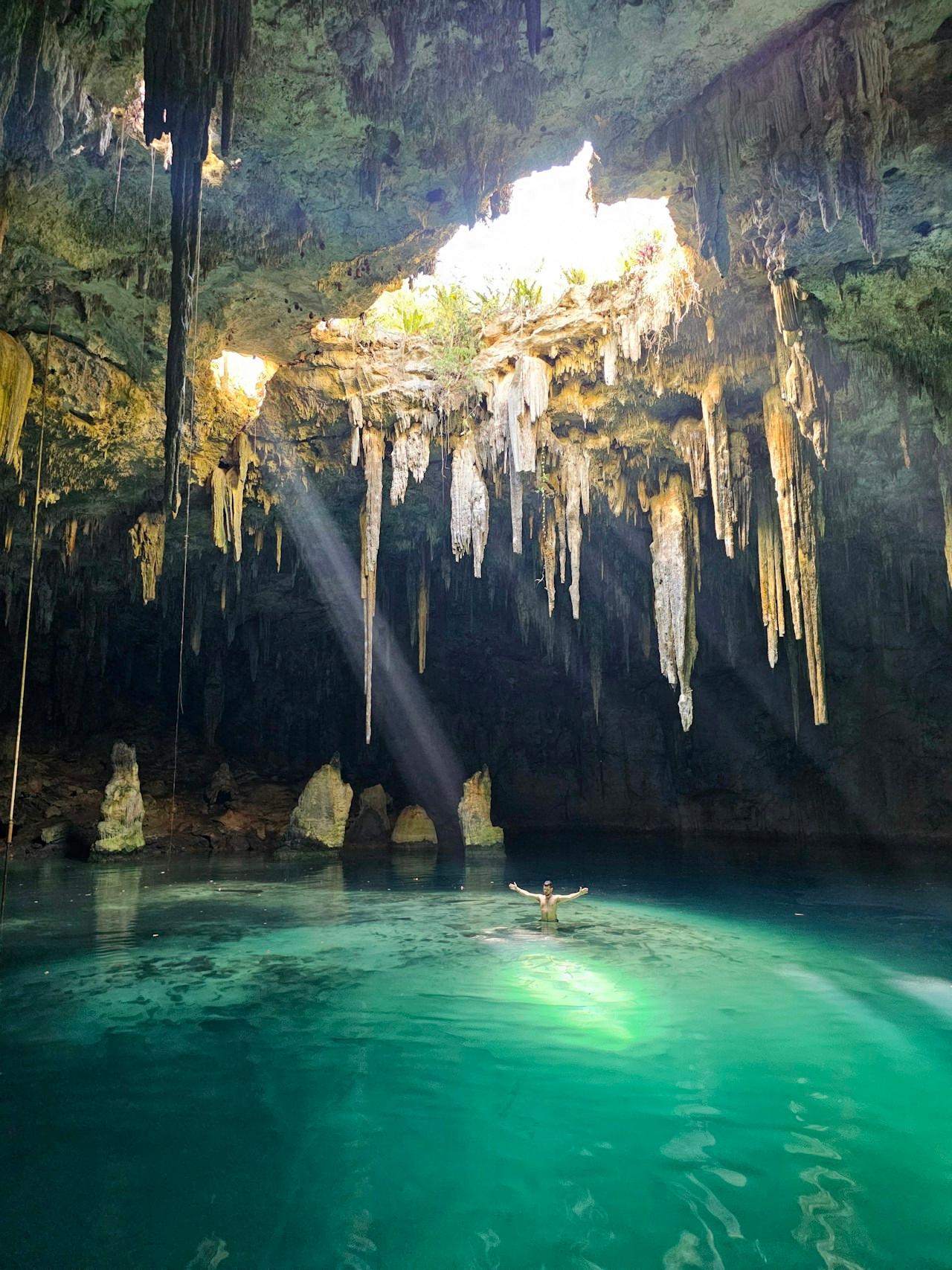
Cenotes of the Riviera Maya: the essential guide
What cenotes are, why they were sacred to the Maya and how to choose which one to visit on your trip.
 guides
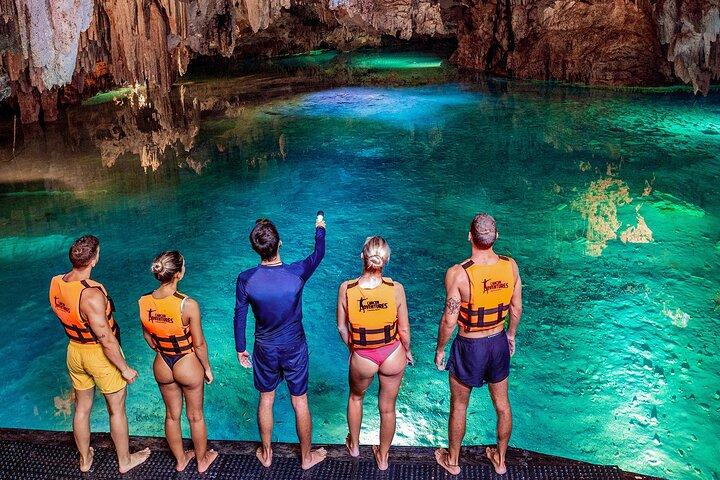
Yal-Ku Lagoon and cenote: the complete guide to snorkeling where freshwater meets the sea
Why the peninsula’s water is so clear, which fish you’ll see at Yal-Ku, how the halocline works and what a small-group morning of cenote swimming and snorkeling near Akumal is really like.
Plan your trip
 3 days
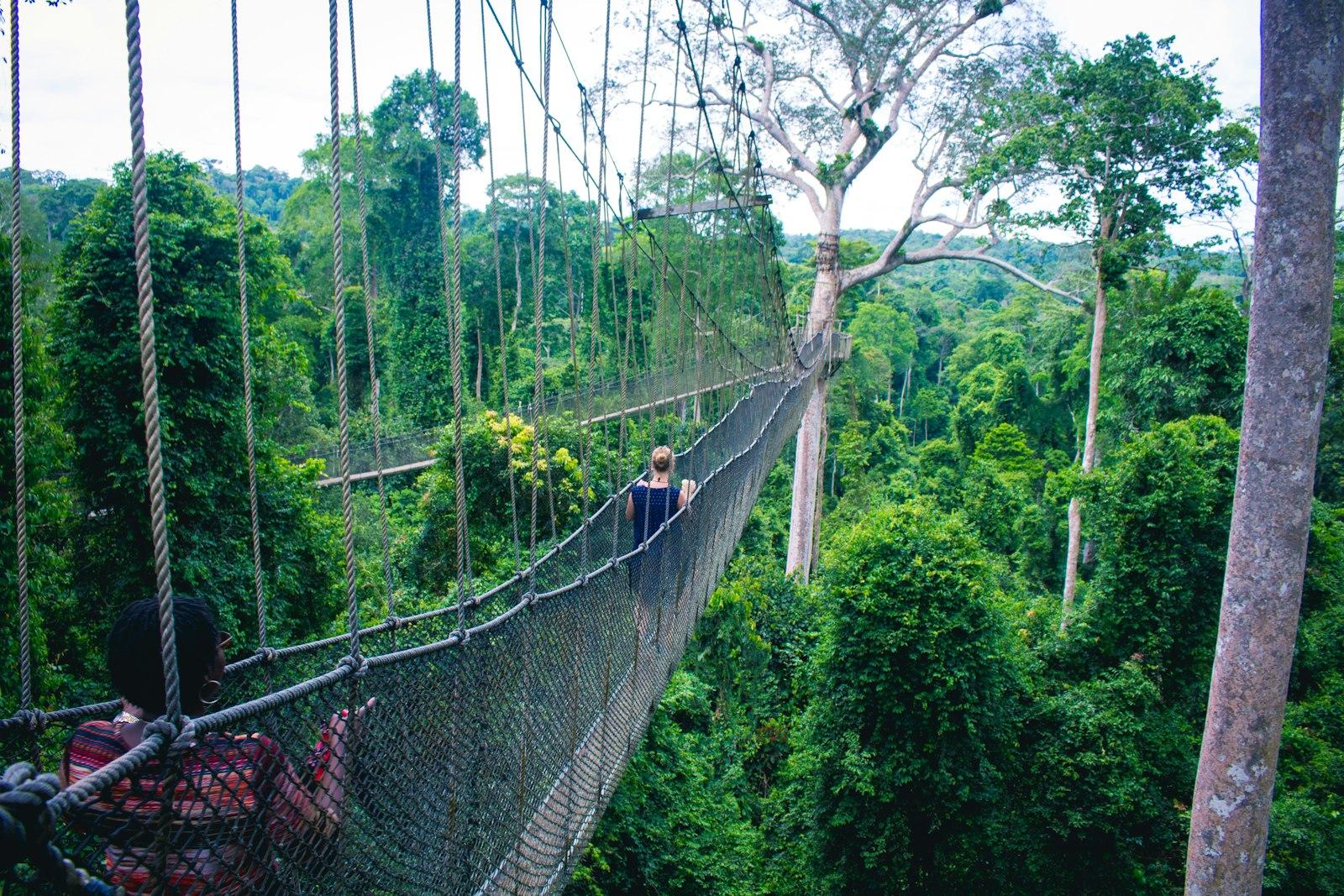
Adventure and Adrenaline in the Riviera Maya: A 3-Day Guide
A 3-day adventure itinerary for the Riviera Maya: an ATV, zip line and cenote combo, Xplor or a caving reserve, and a season set third day, whale sharks in summer or Cozumel drift diving the rest of the year.
 3 days
3 Days in the Riviera Maya: A Long Weekend Plan
A 3-day Riviera Maya plan for a long weekend or stopover: one Playa del Carmen base, two standout outings from the coast itself, and Chichén Itzá deliberately left out because the round trip eats a whole day.
First Time in the Riviera Maya: How to Plan Your Trip
A first timer’s plan for the Riviera Maya: where to base yourself, when to go, how many days you need, what it costs, entry basics, safety, and the order to book everything in.