

Cobá Ruins: The Complete Guide to Nohoch Mul, Punta Laguna and the Cenotes
Everything the Cobá ruins actually involve today: cycling between jungle temple groups, climbing Nohoch Mul now that it has reopened, spotting wild spider monkeys at Punta Laguna, and cooling off in a cave cenote.
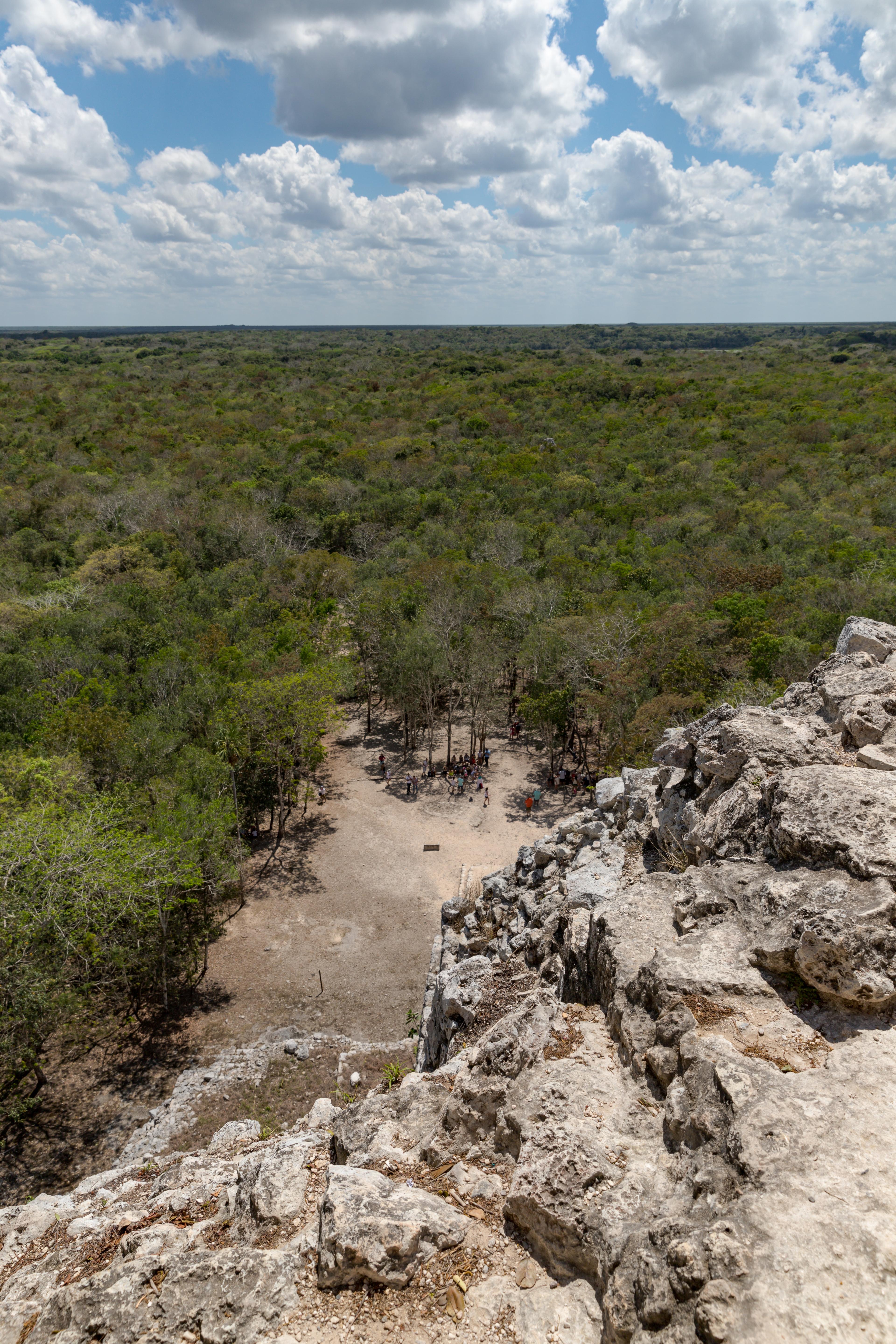
Most visitors to the Yucatán Peninsula see one Maya ruin and assume they have seen them all: a manicured plaza, roped off pyramids, and a parking lot lined with tour buses. The Cobá ruins break that pattern almost immediately. Instead of walking a paved courtyard behind a velvet rope, you pedal a rented bicycle down a jungle trail, weaving around tree roots and columns of leafcutter ants, past temple mounds still half swallowed by ceiba and mahogany trees. Cobá was once one of the largest cities in the Maya world, and today it remains, on purpose, one of the least manicured major archaeological sites in Quintana Roo.
A full day built around Cobá usually stitches together three landscapes that have almost nothing in common. First, the ruins themselves, spread across roughly 70 square kilometers of jungle and connected by ancient stone roads. Second, the Punta Laguna reserve, home to one of the largest surviving populations of wild spider monkeys in the region. Third, a cave cenote carved into the limestone a short ride down the road, cold and clear enough to undo whatever heat the bike ride left behind. None of the three feels like the others, which is exactly why this combination has become one of the more interesting day trips out of Tulum, and one that rewards travelers willing to trade a bit of comfort for a place that still feels unfinished in the best sense.
This guide covers what the Cobá ruins actually involve today: how to get there, how the bicycle and bici-taxi system works once you are inside, whether climbing the tallest pyramid on the peninsula is currently allowed, what the Punta Laguna reserve offers beyond a photo of a monkey, which cenote to add to the route, and how the whole day compares to a morning at Chichén Itzá.
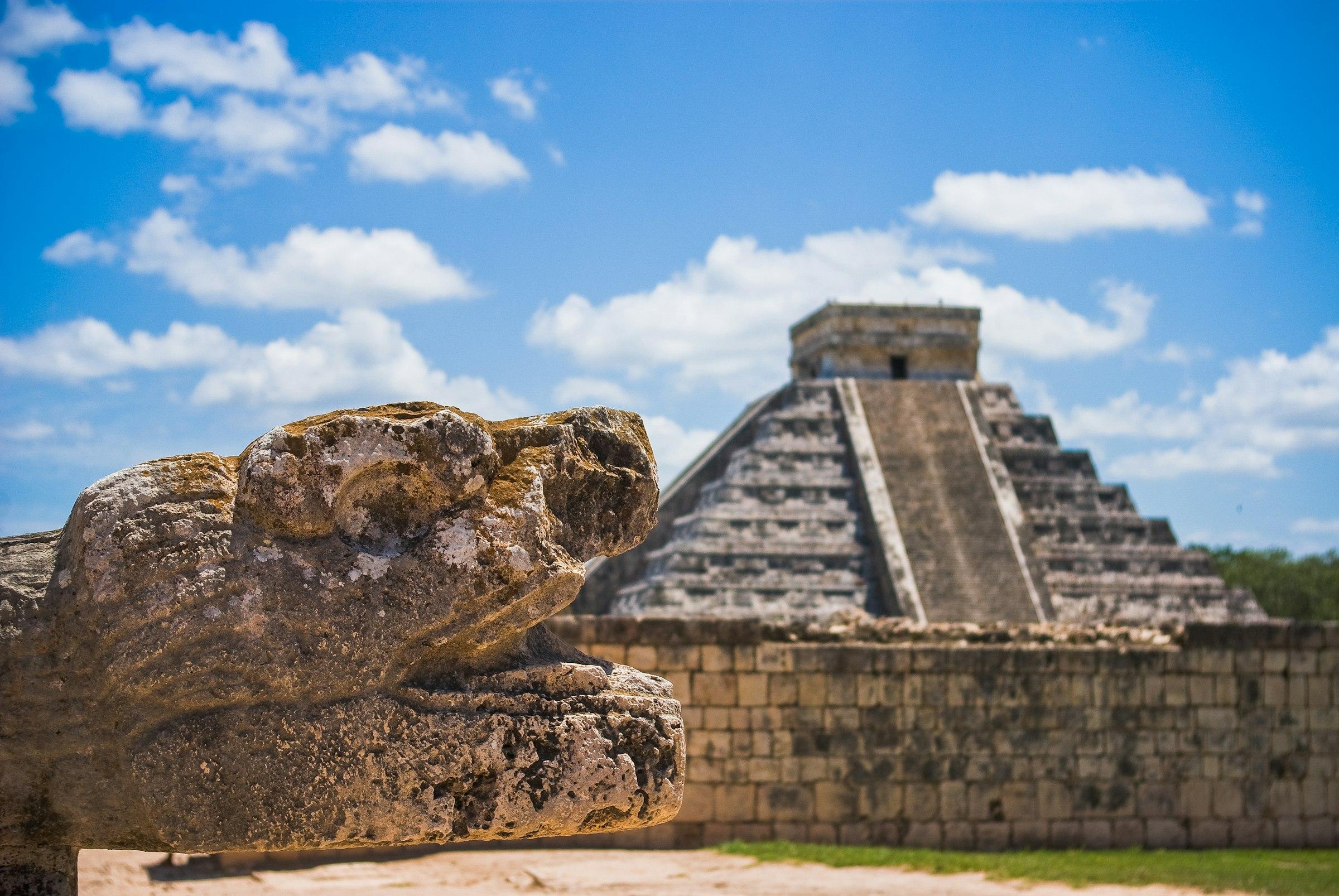
Why the Cobá ruins feel like a different world than Chichén Itzá
Cobá was first settled around 100 CE, according to archaeological evidence recovered from the site, but its real growth came later. Between roughly 600 and 900 CE, it grew into one of the most powerful cities in the northern Maya lowlands, with a resident population that most researchers place above 50,000 people, and some estimates pushing closer to 100,000 once the surrounding settlement zone is included. For comparison, that made Cobá significantly larger, in its prime, than most Maya cities of the same era on the peninsula.
What set Cobá apart was not just size but infrastructure. The city built an estimated 45 sacbeob, the raised white limestone causeways the ancient Maya used to move people and goods between settlements, more than any other site in the Maya world. The longest of them ran roughly 100 kilometers west to the city of Yaxuná, which makes it the longest known sacbé on the peninsula and one of the longest engineered roads anywhere in the pre Columbian Americas. Standing at the start of that road today, at the edge of the Nohoch Mul group, it is hard not to picture it as it once was, a functioning highway, not a ruin.
That power did not last. Around 900 to 1000 CE, Cobá entered a prolonged rivalry with the rising city of Chichén Itzá, roughly 90 kilometers to the northwest, and lost. Cobá's influence declined sharply after that defeat, though the city was never fully abandoned, and some construction and ritual activity continued into the Postclassic period. Chichén Itzá went on to become the dominant power in the northern Yucatán, and centuries later, the far larger tourism draw. Cobá, meanwhile, sat mostly forgotten under jungle canopy until the twentieth century, which is part of why so much of it is still unexcavated today. Archaeologists estimate that only a small fraction of the site's structures have been cleared of vegetation, which means the version most visitors walk through is still, in a real sense, only a preview of what the ancient city actually contained.
Getting to Cobá from Tulum, Playa del Carmen and Cancún
Cobá sits inland, away from the coastal highway, which is part of why it sees fewer visitors than Tulum or Chichén Itzá despite being genuinely closer to some of them. From Tulum, it is about 47 kilometers northwest, a drive of roughly 45 minutes to an hour depending on traffic through town. That makes Tulum by far the most convenient base for a Cobá day trip, and most tours, including ours, start from there.
From Playa del Carmen, the drive covers about 110 to 120 kilometers and typically takes an hour and a half. From Cancún, it is farther still, around 134 kilometers, with a drive time closer to two to two and a half hours depending on where in the hotel zone you start and how the traffic on Highway 180 is running that morning. Both are doable as a long day trip, but they eat a bigger chunk of the day than the ride from Tulum does.
There is no public bus network that makes this easy without a car or an organized tour. ADO runs limited service to the town of Cobá from some points on the coast, but schedules are sparse and rarely line up conveniently with an early arrival, which matters more than it sounds like it should, since Cobá gets both hotter and busier as the morning goes on.
Bicycles, bici-taxis and the sacbé that connects the temple groups
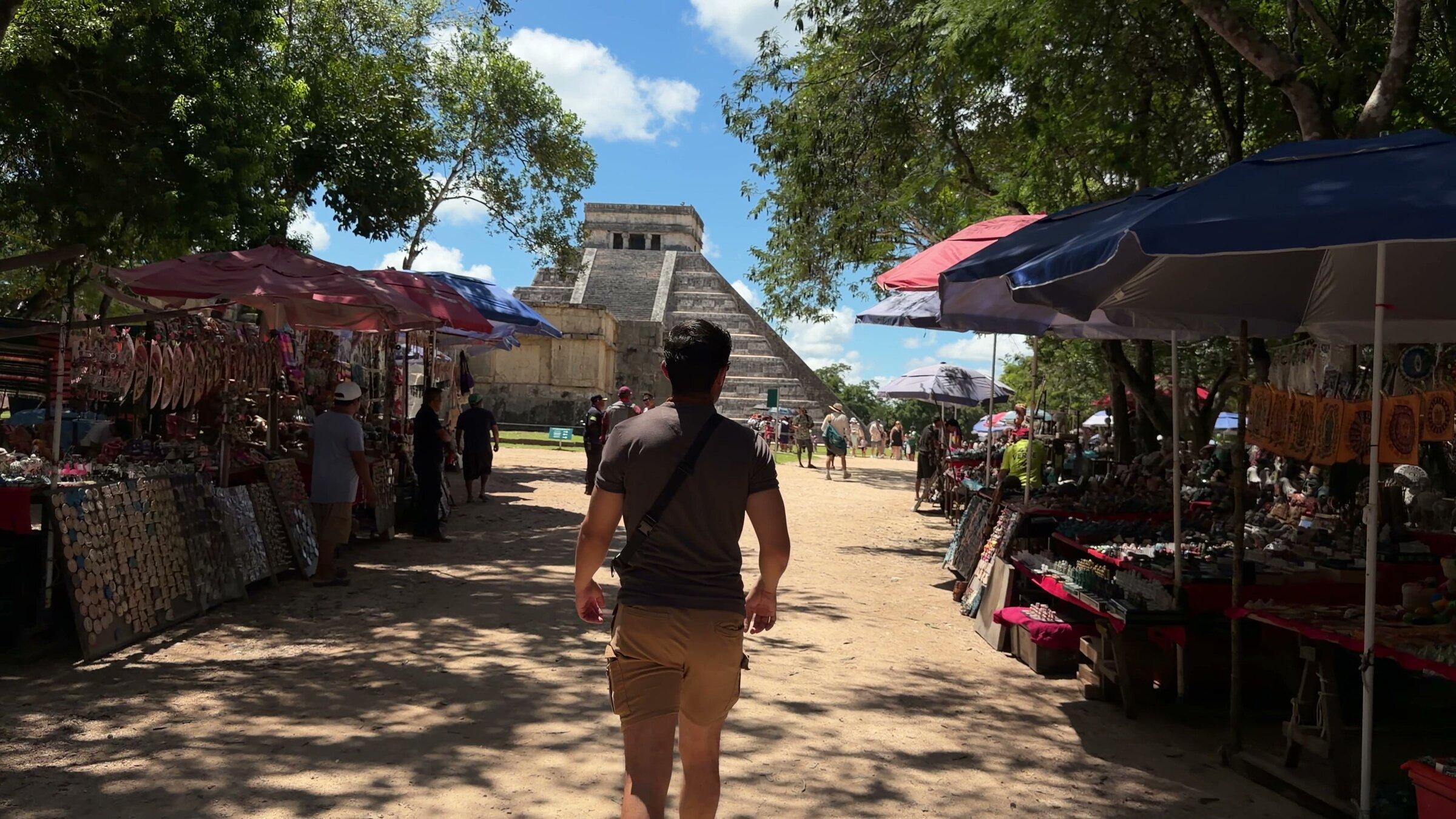
Once you are through the entrance, Cobá does not work like a typical archaeological site with a single circular walking path. The ruins are spread across four main architectural groups, the Cobá Group near the entrance, the Nohoch Mul Group, the Macanxoc Group, and the Paintings Group (Grupo de las Pinturas), and the distances between them run from about one to two and a half kilometers along jungle trails and restored sacbeob. Walking the whole loop in the Yucatán heat is possible, but most people regret it by the second group.
That is why almost everyone rents a bicycle at the entrance. Rates run around 40 to 50 pesos per hour, paid in cash directly to the small stands near the ticket booth, and the bikes are simple beach cruisers, not built for speed but perfectly fine for flat jungle paths. If pedaling is not your thing, bici-taxis, tricycles with a bench seat pulled by a driver, cost roughly 120 to 190 pesos depending on the route and how much of the site you want covered, and the drivers often double as informal guides, pointing out details a rushed visitor would miss.
The main sacbé leading to Nohoch Mul runs about two kilometers from the entrance plaza, wide enough that the ancient engineering is obvious even to someone who has never thought about Maya infrastructure before, a raised, level surface cut straight through terrain that is anything but flat. Along the way, smaller trails branch off toward the Macanxoc Group, known for its carved stelae, and the Paintings Group, where traces of the original painted plaster still cling to interior walls in a few structures. Renting a bike for the full two to three hours it takes to see all four groups is, for almost everyone, the better trade than trying to power through on foot.
Climbing Nohoch Mul in 2026: what changed and what to expect
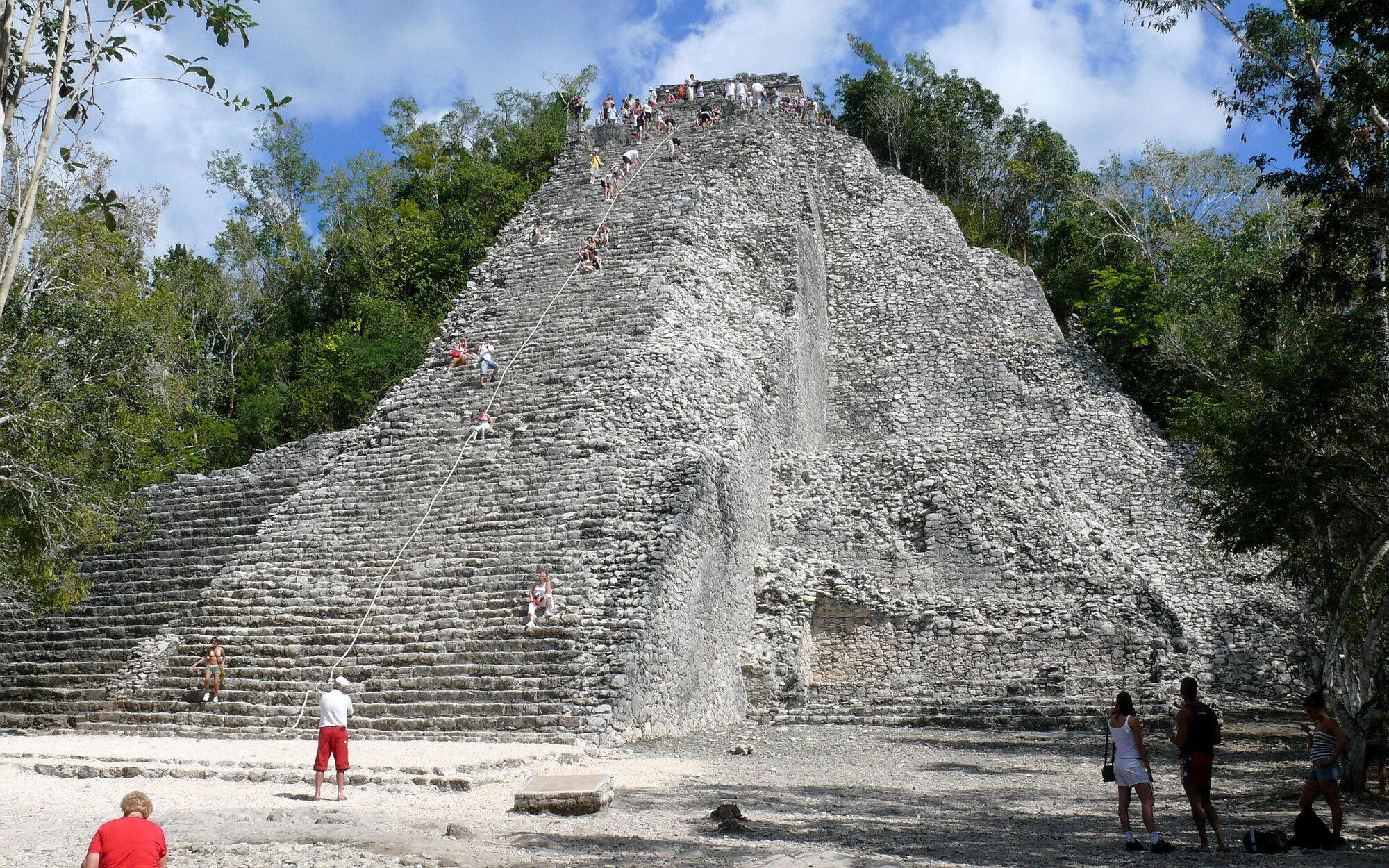
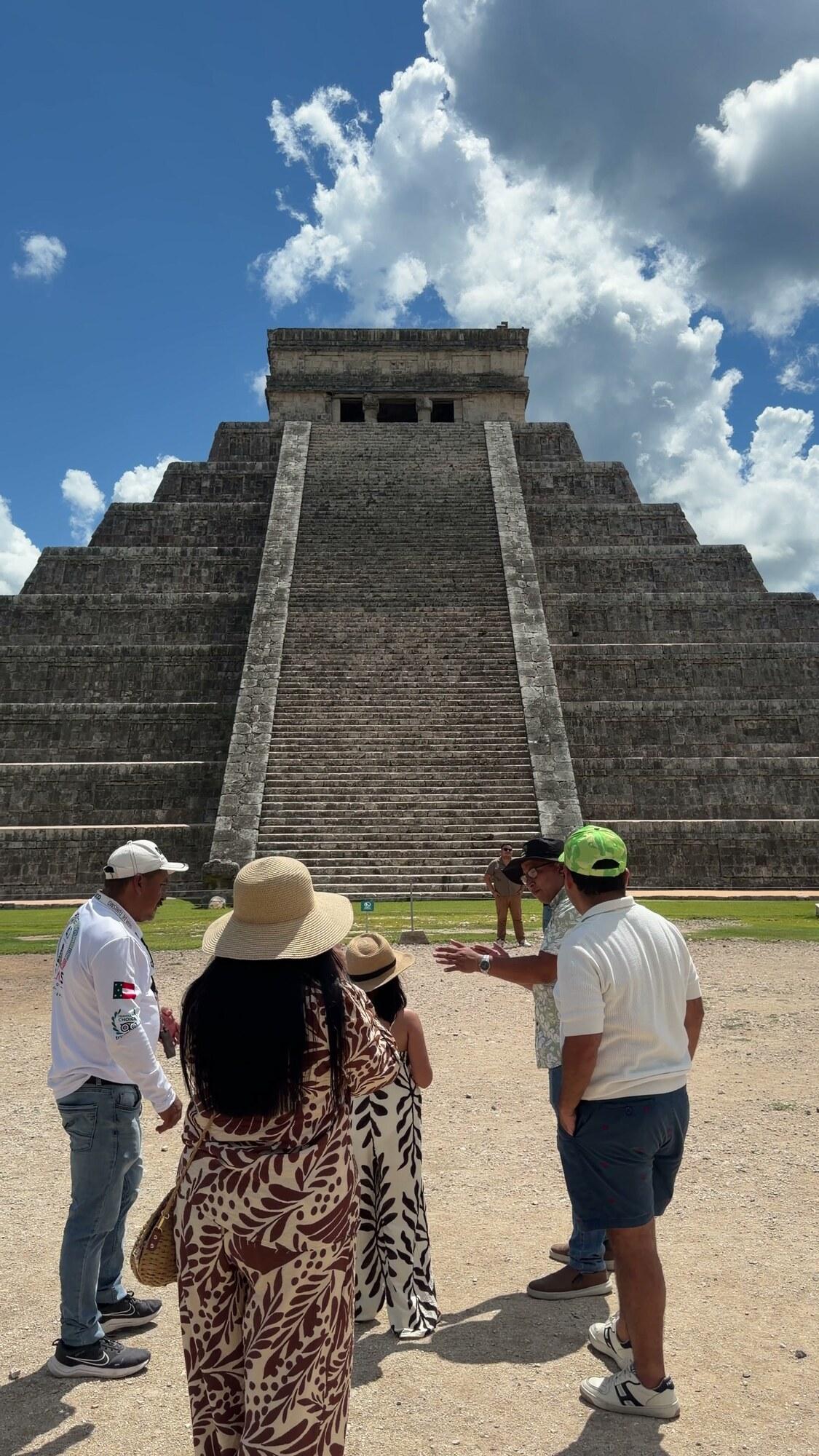
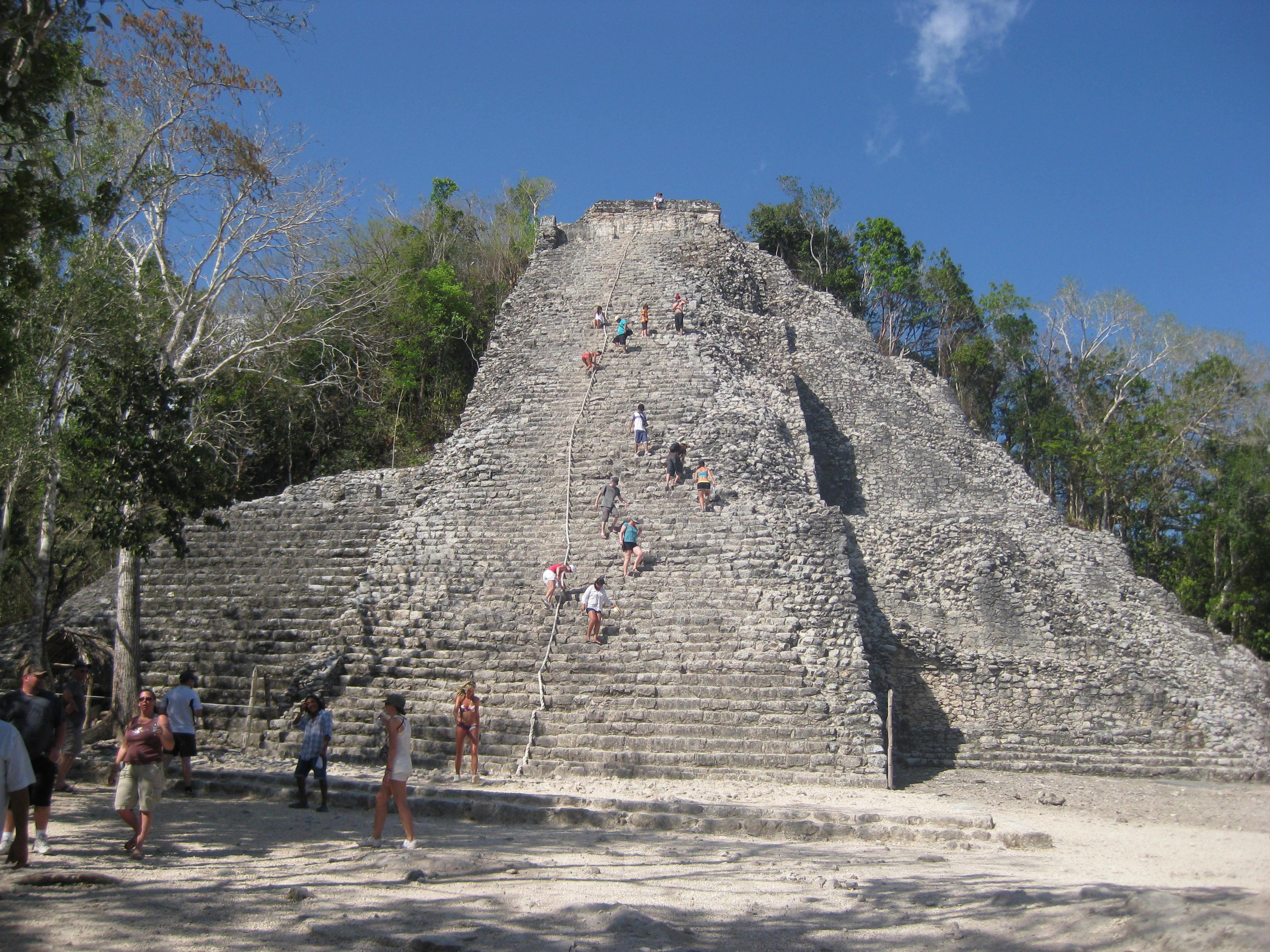
Nohoch Mul is the reason most people put Cobá on their itinerary in the first place. At about 42 meters, it is the tallest pyramid on the Yucatán Peninsula, taller than El Castillo at Chichén Itzá, and for decades it was one of the only major Maya pyramids in the region where climbing to the top was still allowed. That changed in 2020, when INAH, Mexico's national institute of anthropology and history, closed the climb to protect the structure from the wear caused by a constant flow of visitors.
The closure lasted six years. On December 8, 2025, INAH reopened Nohoch Mul for climbing, after installing a new wooden staircase built directly over the original 120 stone steps, protecting the ancient surface while still keeping it visible underneath. As of 2026, Nohoch Mul is again the only major archaeological site on the peninsula where visitors can climb the main pyramid, which is a meaningful distinction now that El Castillo, Ek Balam's Acropolis, and most other tall structures in the region remain permanently closed to climbing.
The climb currently runs from 8:00 a.m. to 3:30 p.m., in small groups of up to 15 people at a time, with a 15 minute limit at the summit before the next group is let up. It is worth planning around those hours specifically, since a day trip that also includes Punta Laguna and a cenote can run long, and arriving at Nohoch Mul after 3:30 means admiring it from the base instead of the top. The steps are steep, and there is a guide rope down the center for the descent, which is, if anyone asks, the part that tends to feel more intimidating than the climb up. Sturdy shoes make a real difference here, since the original stone treads are narrow and uneven under the new staircase, and flip flops are, in practice, a bad idea.
Punta Laguna: the spider monkeys of Otoch Ma'ax Yetel Kooh
About 20 minutes from the Cobá ruins, the Punta Laguna reserve protects roughly 5,000 hectares of jungle around a freshwater lagoon. Its official name, Otoch Ma'ax Yetel Kooh, is Yucatec Maya for the home of the spider monkey and the puma, and it has carried federal protection since 2002. The reserve is run largely by the Maya community that lives in the village beside it, and most of the guides who lead visitors through the trails grew up there, which shows in how quickly they can spot movement in the canopy that a first time visitor would walk right past.
Spider monkeys are the main draw, and the reserve is home to an estimated 600 spider and howler monkeys combined, living wild in the surrounding forest rather than in any kind of enclosure. Sightings are not guaranteed, since these are wild animals moving through a large territory, but a guided walk meaningfully improves the odds, and early morning or late afternoon tends to be when the monkeys are most active and easiest to hear before you see them. A basic admission covers the trails, the small on site museum explaining local plant and animal life, and a swim in the lagoon; guided walks, canoe trips on the water, and zip line add ons are typically priced separately.
What makes Punta Laguna worth the detour is less any single sighting and more the contrast with the ruins. After a morning spent among stone temples built by people who reshaped this jungle centuries ago, walking through a forest still shaped by the animals that have always lived in it is a useful reminder that Cobá was never just architecture. It sat inside a living landscape, and in places like Punta Laguna, still does.
The cenote stop: Choo-Ha, Tamcach-Ha and Multum-Ha
Most Cobá day trips end with a cenote, and the three most commonly paired with the ruins sit about seven kilometers down the road toward the town of Yaxuná: Choo-Ha, Tamcach-Ha, and Multum-Ha. Choo-Ha and Tamcach-Ha sit close enough together that most visitors see both, or at least both are accessible from the same small ticket office and parking area. Multum-Ha sits across the road, down a longer dirt track, and sees noticeably fewer visitors as a result.
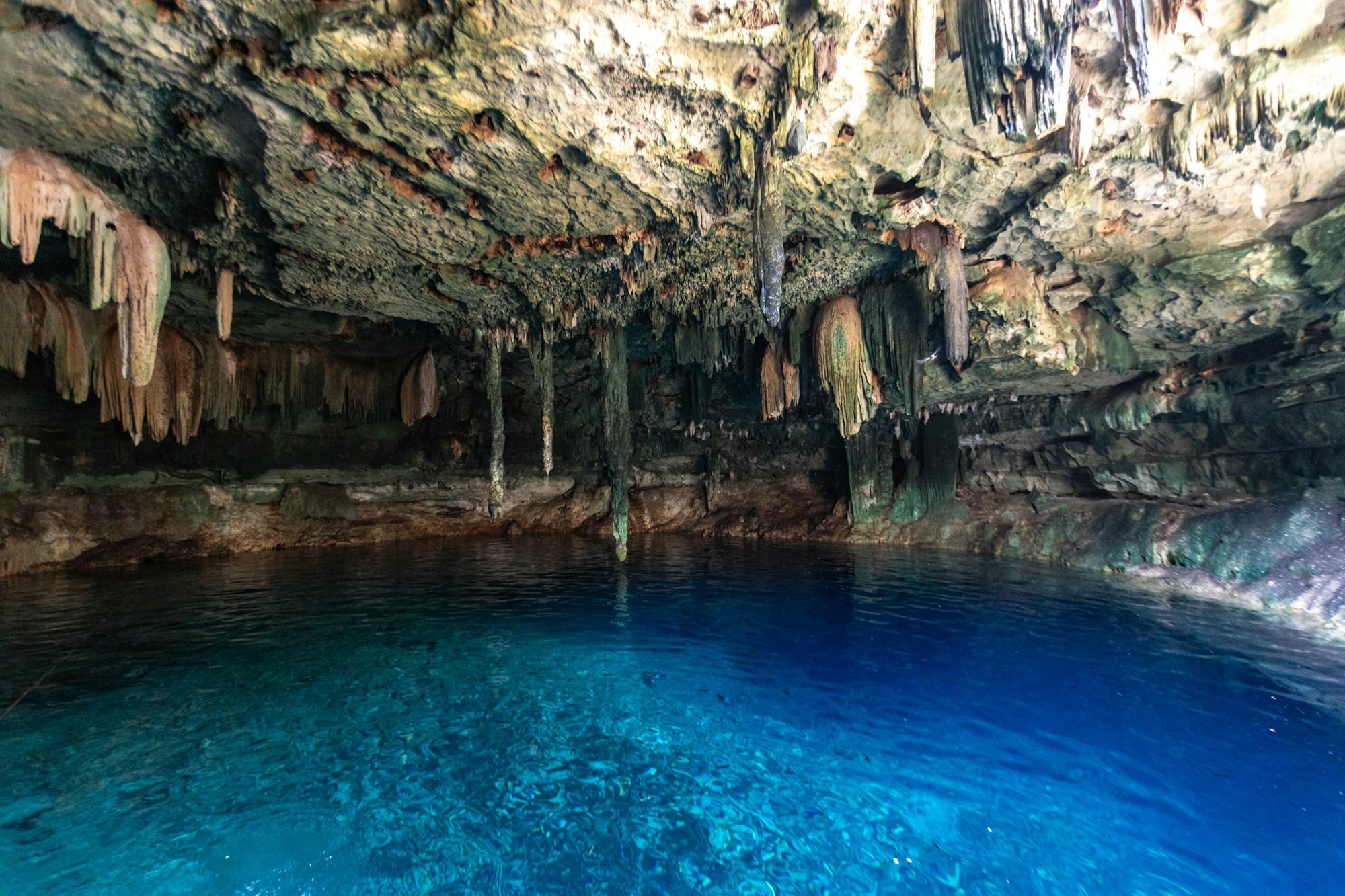
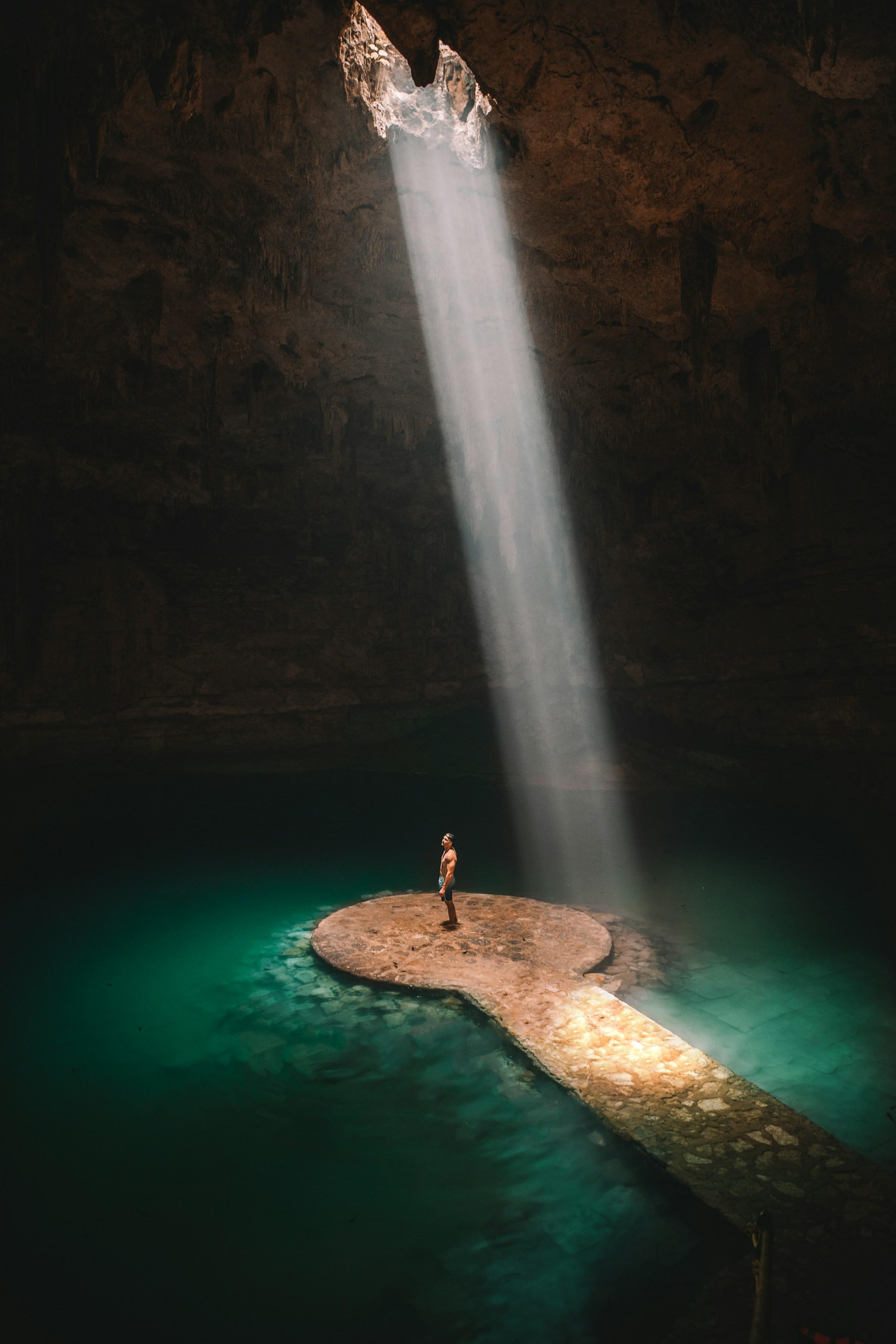
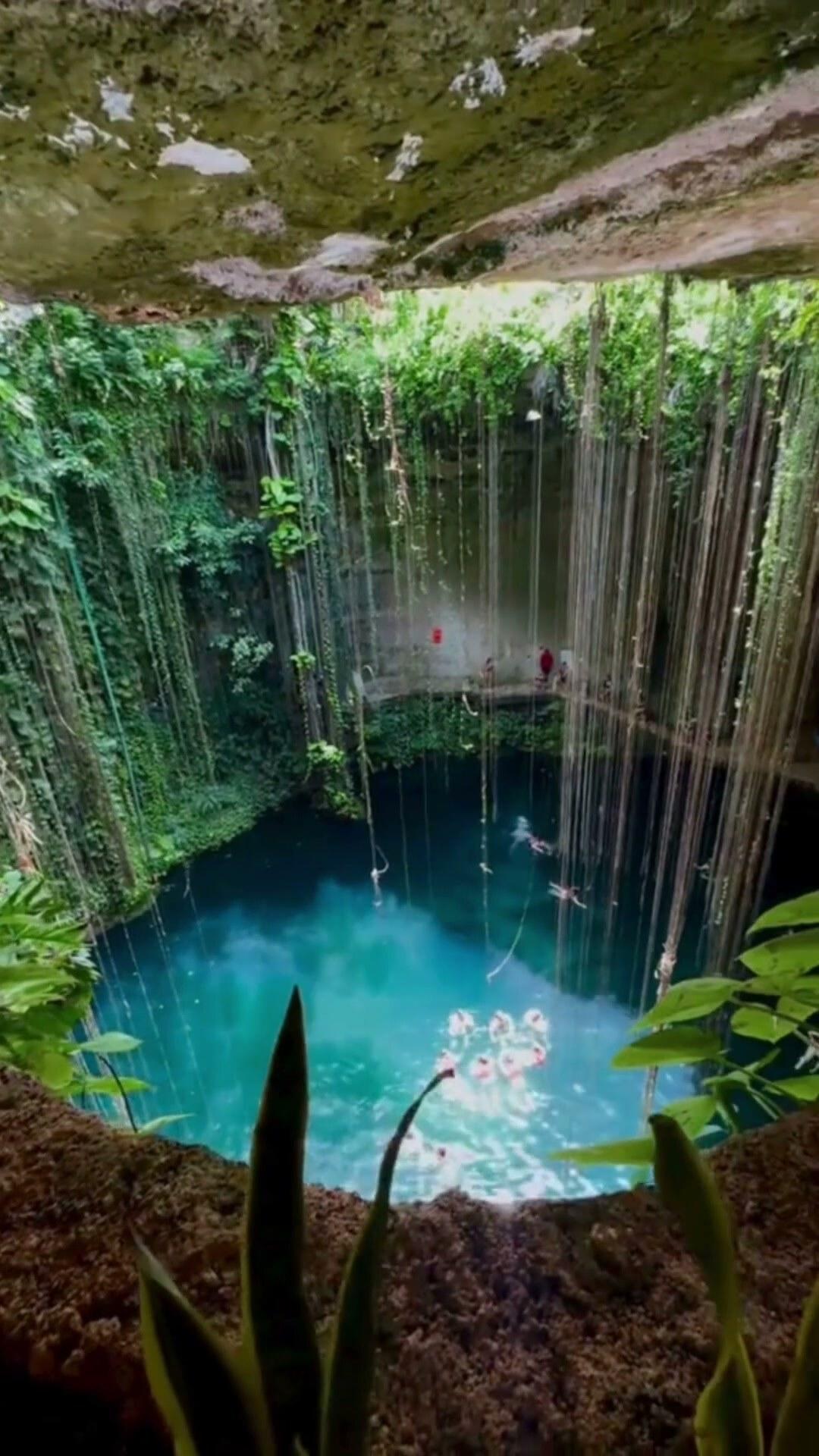
All three are cave cenotes rather than the open sky cenotes more common closer to Tulum, which means the water sits inside a limestone chamber, lit by a mix of daylight through openings in the rock and, in some sections, string lights installed by the local ejido that manages them. Choo-Ha is shallow enough near the entrance for confident non swimmers to enjoy it, with stalactites hanging low enough to see clearly without diving equipment. Tamcach-Ha is deeper and better known for a couple of elevated wooden platforms where more adventurous visitors jump into the water below, higher than what most other cenotes in the area offer.
Getting to these three cenotes without a car or an organized tour mostly means renting a bike, since there is no regular public transport running that specific stretch of road. On an organized day trip, this leg is usually the easiest part of the day: no negotiating, no route planning, just a cool, clear pool waiting at the end of a hot morning spent walking and pedaling around the ruins. Water shoes help on the descent into the cave chambers, since the stone steps down to the water can be slick, and a dry bag for your phone is worth packing if you plan to photograph the stalactites up close.
Practical tips and whether a Cobá ruins day trip beats Chichén Itzá
Entrance to the archaeological zone currently runs 210 pesos for foreign visitors, the standard INAH federal fee, plus a separate 120 peso community fee charged by the local ejido, for a total of about 330 pesos, roughly 18 US dollars at typical exchange rates. The site opens at 8:00 a.m. and closes at 5:00 p.m., with last entry around 4:00 p.m., though anyone planning to climb Nohoch Mul should aim to arrive well before the 3:30 p.m. cutoff for the climb itself.
Cash is essential. Card terminals at Cobá fail often enough that vendors and bike rental stands treat cash as the only reliable option, and there is no ATM on site, with the nearest one roughly 40 minutes away by car. Bringing around 1,200 pesos per person in smaller bills, mostly 50s and 100s, covers the entrance fees, a bike rental, water, and a snack without anyone needing to make change for a 500 peso note.
Arriving early matters more at Cobá than it does at most sites on the peninsula, since there is little shade along the sacbeob and the jungle humidity climbs fast after mid morning. Getting to the entrance by 8:00 or 8:30 a.m. means cooler cycling, thinner crowds at Nohoch Mul, and enough time left afterward for Punta Laguna and a cenote before the heat of early afternoon sets in.
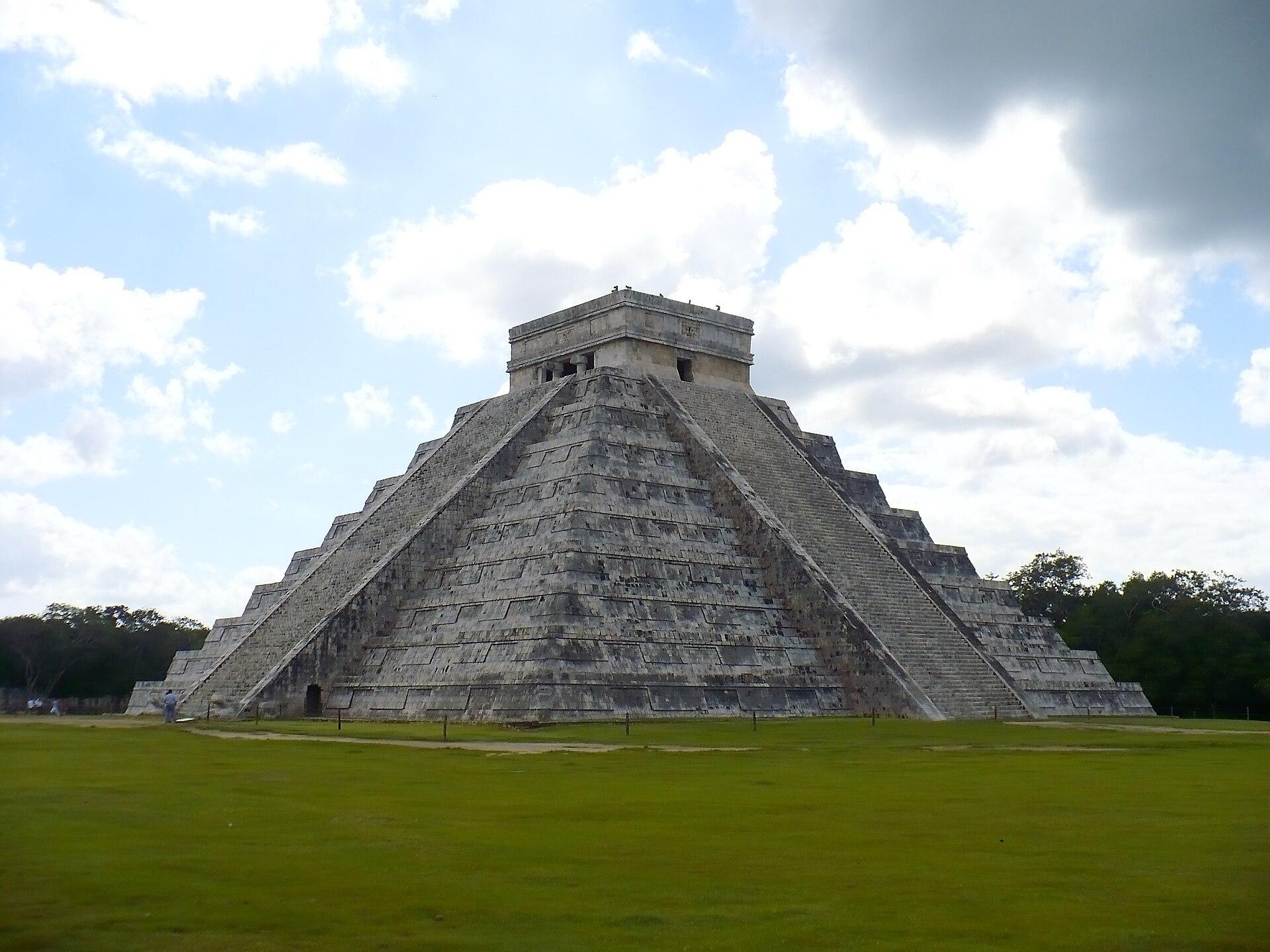
As for whether a Cobá ruins day trip is worth it next to Chichén Itzá, the honest answer depends on what you are looking for. Chichén Itzá is more historically famous, better restored, and easier to visit in a short window, which is exactly why it draws the crowds it does, often several thousand visitors a day during high season. Cobá trades that polish and fame for something Chichén Itzá can no longer offer: jungle you actually move through under your own effort, a pyramid you can currently climb, and a day that folds in wild spider monkeys and a swim in a cave cenote, none of which fit into a typical Chichén Itzá itinerary. Travelers who have already done Chichén Itzá tend to find Cobá the more memorable of the two, for exactly that reason.
A day built around the Cobá ruins rewards a bit of effort: pedaling instead of strolling, watching for monkeys instead of scanning a gift shop, climbing a real staircase instead of admiring one from behind a rope. If that sounds like the kind of day you are after, you can book the route directly with us, bikes, Punta Laguna, and cenote included, and let the jungle set the pace.
Your next experience starts here
Start this adventureTours you might like
- Archaeology
Tulum and Cobá 4-in-1: Ruins, Cenote and 5th Avenue
- Archaeology
Chichén Itzá Plus: Suytún & Ik Kil Cenotes and Valladolid
- Archaeology
Chichén Itzá Classic: Saamal Cenote and Valladolid
- Adventure
Tulum, Akumal Turtles & ATVs at Casa Jaguar
- Archaeology
Tulum Express: Ruins and Santa Fe Beach
- Ocean
Isla Mujeres Plus: Catamaran with Open Bar, Snorkeling & Playa Norte

Places in this story
Keep reading
 guides
Chichén Itzá: the guide to not regretting the trip
How to arrive before anyone else, what to see beyond El Castillo, and why the Sacred Cenote is the second most important place on the site that almost nobody visits properly.
 guides
Cenote Suytún, Ik Kil and Valladolid: a guide to what surrounds Chichén Itzá and makes the trip worth it
Chichén Itzá is the heart of the day, but cenotes Suytún and Ik Kil and the colonial town of Valladolid turn it into a complete trip. History, what to see at each stop, how the day runs and practical tips.
 stories
The real Tulum: what nobody photographs
Everyone knows the ruins on the cliff and the turquoise sea. But there is another Tulum that barely appears in travel stories. Here is where to find it.
Plan your trip
 4 days
Maya Ruins of the Riviera Maya: A 4-Day Itinerary
A 4-day Riviera Maya itinerary through four Maya cities, Tulum, Cobá, Chichén Itzá and Ek Balam, spanning six centuries of the same civilization, and closing at Ek Balam beside the living Maya village that still runs it.
 5 days
5 Days in the Riviera Maya: The Complete Itinerary
A realistic 5 days Riviera Maya itinerary that starts easy, builds toward Chichén Itzá as the trip’s centerpiece and closes on a festive night, with real timing and logistics for every day.
 7 days
7 Days in the Riviera Maya: A North to South Route
A 7-day Riviera Maya itinerary built as a route, not a base: three nights in Playa del Carmen for Cozumel and Chichén Itzá, then four in Tulum for the cenotes, Cobá, Sian Ka’an and the lagoon at Bacalar.